Choosing the right PAT strategy
Within a Quality by Design (QbD) framework, Process Analytical Technology (PAT) plays a central role in understanding how Critical Material Attributes (CMAs) and Critical Process Parameters (CPPs) affect the Critical Quality Attributes (CQAs) of the finished product. For tablet manufacturing, however, an important question remains: should product quality be assessed in the feed frame, immediately before compression, or directly on the finished tablets?
Both PAT strategies, measurement in the feed frame and measurement of finished tablets, provide valuable but distinct insights and can therefore be highly complementary. Feed-frame analysis enables real-time monitoring of the blend immediately before compression, whereas final-tablet measurement confirms that the finished product meets its required CQAs after the compression process. The most effective control strategy should therefore balance the strengths and limitations of each approach and, where appropriate, combine them to ensure comprehensive process and product control.
Installing a near-infrared (NIR) probe in the feed frame provides real-time information on blend homogeneity and API concentration close to the point of compaction. This approach can help detect segregation and potency variation before the powder enters the dies. When combined with suitable predictive models and upstream process data, feed-frame measurements can support process monitoring and control strategies.
The limitation of feed-frame measurement
Nevertheless, this remains an indirect assessment of final tablet quality. The development of a robust feed-frame PAT strategy may require extensive preliminary trials, multidimensional Design of Experiments (DoE) and the integration of several upstream sensors. The measurement environment itself also presents analytical challenges. Variations in powder flow and density can cause spectral baseline shifts, while rotating paddles may intermittently disrupt the optical path and introduce spectral artefacts. In addition, lead–lag models are required to associate a given spectrum with the tablets subsequently produced. A sensor failure or loss of critical process data may therefore compromise the entire release strategy.
Why consider post-compression measurement?
Post-compression measurement provides a complementary, and more direct, perspective by assessing the actual dosage unit delivered to the patient. It captures not only variations in the powder blend, but also variability introduced during die filling and compression, including tablet mass, thickness, porosity and hardness. It also avoids the spectral disturbances associated with a moving powder bed and eliminates the need to correlate feed-frame measurements with individual tablets. Since content uniformity is ultimately defined at the discrete dosage-unit level, direct tablet analysis brings the measurement closer to the final quality and regulatory endpoint.
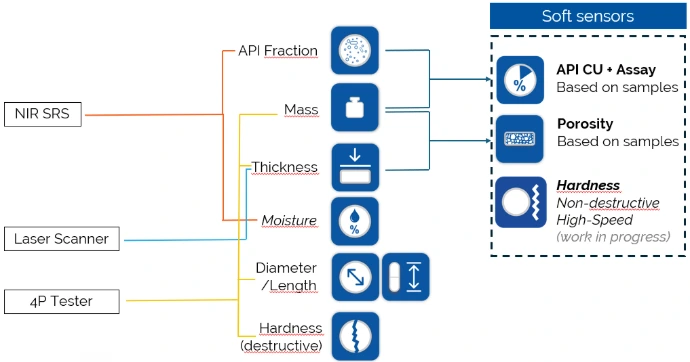
Pharma Technology’s Q-Control approach makes instant, automated and non-destructive post-compression testing possible across multiple CQAs. Independent of the tablet press, Q-Control solutions can be deployed in-line, at-line or off-line, from formulation and process development to continuous process verification and commercial manufacturing. By generating large amounts of tablet-level data within a short period, they facilitate DoE execution, help establish relationships between CPPs and CQAs, support design-space definition and provide a comprehensive view of final product quality. Rather than relying exclusively on an upstream prediction, manufacturers can therefore monitor what ultimately matters most: the quality of every finished tablet, supporting Real Time Release Testing (RTRT).
Turning formulation variables into measurable results
During formulation development, scientists must evaluate the effect of multiple material and process variables, including:
- API content and particle properties
- Excipient type, grade and content
- Binder and disintegrant levels
- Lubricant concentration and blending time
- Granulation and drying conditions
- Powder flowability and bulk density
- Compression force, press speed and dwell time
Post-compression CQA measurements provide the response data needed to understand how these variables affect the finished tablet. They can therefore be used as outputs in Design of Experiments (DoE), formulation screening and process-development studies.
Mass
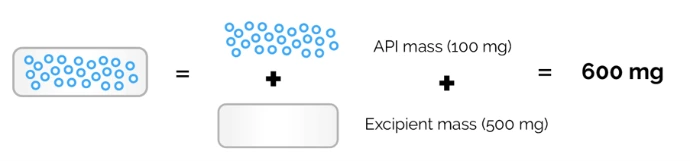
Tablet mass is influenced by powder flow, bulk density, die filling and feed-frame behaviour.
During R&D, mass variation provides an early indication of whether a formulation can be consistently fed and compressed. Poor mass consistency may reveal inadequate flowability, segregation or sensitivity to press speed. This information helps scientists optimise the formulation or select suitable granulation and feeding strategies.
During process development and manufacturing, mass trends can be used to identify changes in die filling, powder supply or tablet-press performance.
However, consistent mass does not necessarily guarantee consistent API content. Tablet mass becomes particularly valuable when combined with API-fraction measurements.
Thickness

Tablet thickness is determined by fill volume, formulation compressibility, compression force and elastic recovery after ejection.
In formulation development, thickness measurements help characterise how a formulation responds to compression. Comparing thickness at different compression forces can provide insight into compactability, densification and elastic recovery.
Thickness is also important when defining tablet geometry and ensuring compatibility with coating, handling and packaging equipment. During scale-up, changes in thickness may indicate that the formulation behaves differently at higher press speeds or shorter dwell times.
API fraction and assay
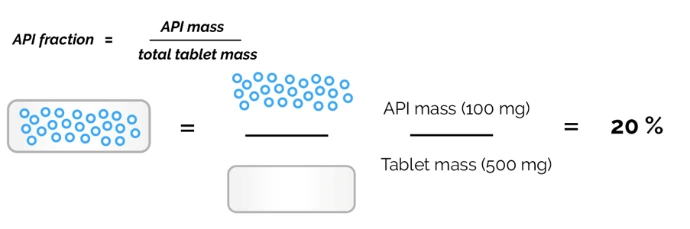
The API fraction represents the proportion of API within the tablet, generally expressed as a percentage of its total mass.
During formulation development, measuring API fraction helps evaluate blend homogeneity and the risk of segregation. This is particularly important for low-dose formulations, where differences in particle size, density or electrostatic properties can lead to uneven API distribution.
Combining the predicted API fraction with the individual tablet mass allows the API content of each tablet to be calculated:
{API content} = {API fraction} x {tablet mass}
Individual results provide information about content uniformity, while aggregated results provide insight into the average API content and assay relative to the target or label claim.
Content uniformity
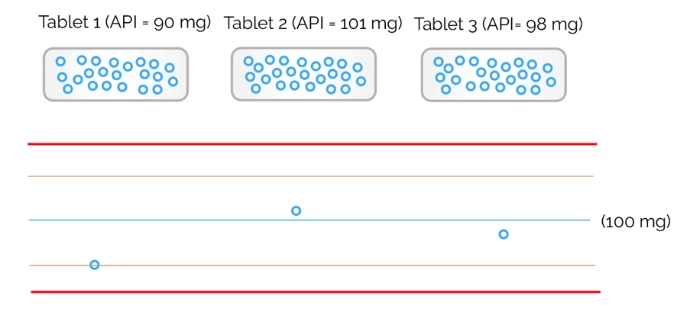
Content uniformity confirms whether the API is consistently distributed across individual tablets.
At both R&D and manufacturing scales, content-uniformity is one of the most important CQA to control as it ensures that every single tablet or capsule contains an equal and accurate amount of the active pharmaceutical ingredient (API). Data help scientists evaluate the influence of blending time, formulation composition, API concentration, particle characteristics, lubrication and feeding conditions. The results can reveal whether variability originates from the formulation, the blend or the compression process.
High-resolution measurements with NIR-SRS (Near-Infrared Spatially Resolved Spectroscopy) are especially valuable for identifying short-term changes that may be hidden by conventional sampling. For example, they can reveal transient segregation, feed-frame instability or content fluctuations during the beginning and end of a compression run.
During process development, these insights support the identification of critical material attributes and critical process parameters that must be controlled to ensure a uniform dose.
From a regulatory perspective, CU measurement is essential to:
- Protect patients from underdosing, which may reduce efficacy, and overdosing, which may increase toxicity.
- Demonstrate compliance with harmonised pharmacopoeial requirements for uniformity of dosage units, including USP <905> and the corresponding European and Japanese standards.
- Confirm that formulation and manufacturing processes consistently distribute the API throughout the batch.
- Support process validation, batch release and continued process verification under GMP.
- Detect segregation, poor blending, inconsistent tablet weight or filling, and process drift.
Enable real-time release testing when supported by validated process analytical technology and an approved control strategy.
Moisture

Moisture affects powder flow, compressibility, tablet strength, chemical stability and microbial risk. It can also influence disintegration, dissolution and shelf life.
During formulation development, moisture measurements help determine how hygroscopic APIs and excipients respond to environmental conditions. They can also be used to optimise granulation and drying parameters and to assess the robustness of the formulation across an acceptable moisture range.
Correlating moisture with hardness, porosity and thickness provides insight into how water affects compression behaviour. An insufficient moisture level may reduce binding between particles, while excessive moisture can alter flow, promote sticking or compromise product stability.
Monitoring moisture after compression therefore supports both formulation optimisation and process control.
Porosity
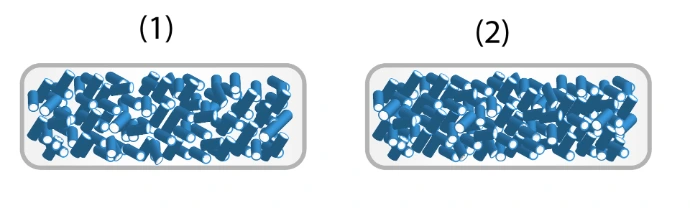
Porosity describes the internal void volume within a tablet and is strongly influenced by formulation composition and compression conditions.
During R&D, porosity provides valuable information about particle rearrangement, deformation and densification. It helps scientists understand how different excipients, binder levels and compression forces affect the internal structure of the tablet.
Porosity is also connected to several performance attributes:
- Higher porosity generally facilitates liquid penetration and disintegration but may reduce mechanical strength. (1)
- Lower porosity can improve tablet strength but may delay disintegration or dissolution. (2)
- Changes in porosity can influence coating uptake and the release profile.
Measuring porosity therefore helps bridge the gap between compression behaviour and expected biopharmaceutical performance.
Hardness
Hardness reflects the mechanical strength of a tablet and its ability to withstand handling, coating, packaging and transport.
During formulation development, hardness measurements help evaluate compactability and the effects of binders, lubricants and compression force. They can also reveal lubricant sensitivity or insufficient particle bonding.
Tablets that are too soft may chip, break or generate dust, while tablets that are too hard may disintegrate or dissolve too slowly. The objective is therefore not simply to maximise hardness but to achieve the appropriate balance between mechanical strength and drug-release performance.
Traditional hardness testing is destructive and is performed on selected samples. Non-destructive prediction allows the tablet to be preserved for further analysis. This makes it possible to correlate hardness with mass, thickness, porosity, moisture and API content on the same tablet.
Diameter and length
Diameter and length measurements provide insight into tooling, tablet geometry and formulation behaviour after compression.
During R&D, these measurements help scientists assess dimensional stability and elastic recovery. They are also useful when selecting tooling and designing tablets for swallowing, coating, scoring and packaging.
Unexpected dimensional variations can indicate deformation, sticking, tooling wear or changes in compression conditions. Monitoring these attributes also helps ensure that scale-up does not negatively affect tablet geometry.
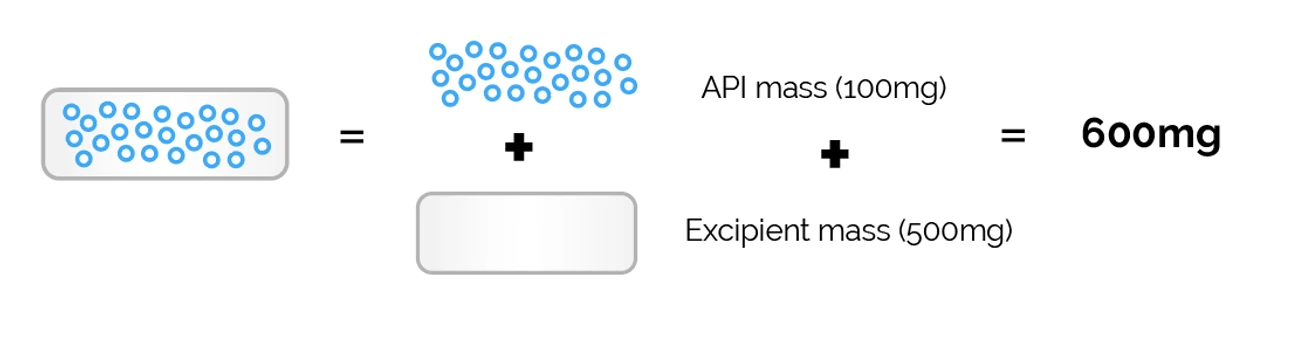
Tablet mass is influenced by powder flow, bulk density, die filling and feed-frame behaviour.
During R&D, mass variation provides an early indication of whether a formulation can be consistently fed and compressed. Poor mass consistency may reveal inadequate flowability, segregation or sensitivity to press speed. This information helps scientists optimise the formulation or select suitable granulation and feeding strategies.
During process development and manufacturing, mass trends can be used to identify changes in die filling, powder supply or tablet-press performance.
However, consistent mass does not necessarily guarantee consistent API content. Tablet mass becomes particularly valuable when combined with API-fraction measurements.
Tablet thickness is determined by fill volume, formulation compressibility, compression force and elastic recovery after ejection.
In formulation development, thickness measurements help characterise how a formulation responds to compression. Comparing thickness at different compression forces can provide insight into compactability, densification and elastic recovery.
Thickness is also important when defining tablet geometry and ensuring compatibility with coating, handling and packaging equipment. During scale-up, changes in thickness may indicate that the formulation behaves differently at higher press speeds or shorter dwell times.
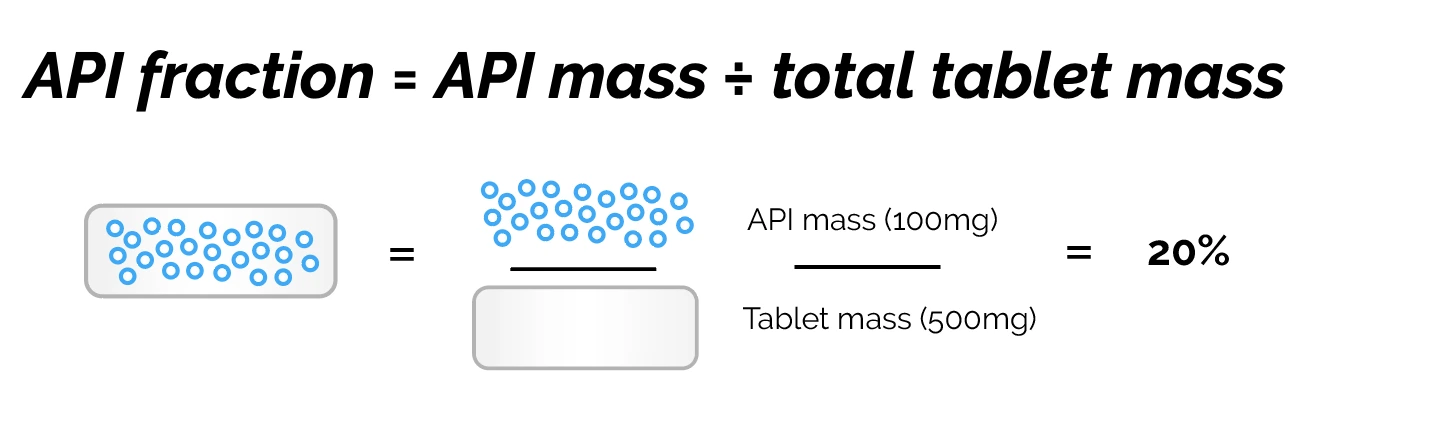
The API fraction represents the proportion of API within the tablet, generally expressed as a percentage of its total mass.
During formulation development, measuring API fraction helps evaluate blend homogeneity and the risk of segregation. This is particularly important for low-dose formulations, where differences in particle size, density or electrostatic properties can lead to uneven API distribution.
Combining the predicted API fraction with the individual tablet mass allows the API content of each tablet to be calculated:
{API content} = {API fraction} x {tablet mass}
Individual results provide information about content uniformity, while aggregated results provide insight into the average API content and assay relative to the target or label claim.
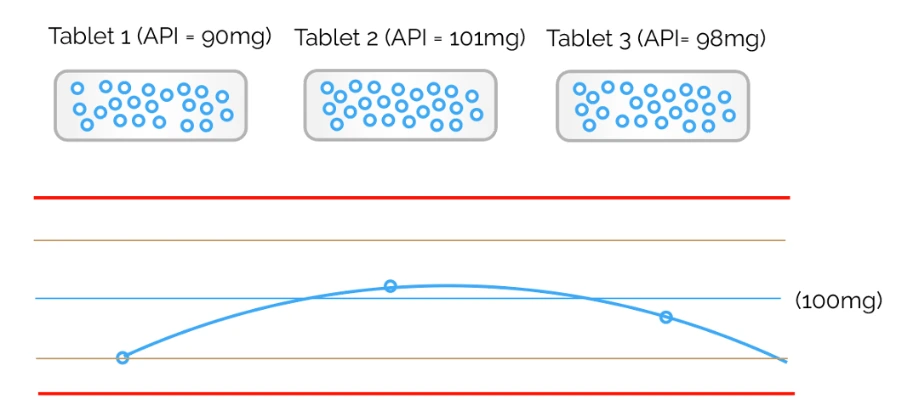
Content uniformity confirms whether the API is consistently distributed across individual tablets.
At both R&D and manufacturing scales, content-uniformity is one of the most important CQA to control as it ensures that every single tablet or capsule contains an equal and accurate amount of the active pharmaceutical ingredient (API). Data help scientists evaluate the influence of blending time, formulation composition, API concentration, particle characteristics, lubrication and feeding conditions. The results can reveal whether variability originates from the formulation, the blend or the compression process.
High-resolution measurements with NIR-SRS (Near-Infrared Spatially Resolved Spectroscopy) are especially valuable for identifying short-term changes that may be hidden by conventional sampling. For example, they can reveal transient segregation, feed-frame instability or content fluctuations during the beginning and end of a compression run.
During process development, these insights support the identification of critical material attributes and critical process parameters that must be controlled to ensure a uniform dose.
From a regulatory perspective, CU measurement is essential to:
- Protect patients from underdosing, which may reduce efficacy, and overdosing, which may increase toxicity.
- Demonstrate compliance with harmonised pharmacopoeial requirements for uniformity of dosage units, including USP <905> and the corresponding European and Japanese standards.
- Confirm that formulation and manufacturing processes consistently distribute the API throughout the batch.
- Support process validation, batch release and continued process verification under GMP.
- Detect segregation, poor blending, inconsistent tablet weight or filling, and process drift.
- Enable real-time release testing when supported by validated process analytical technology and an approved control strategy.
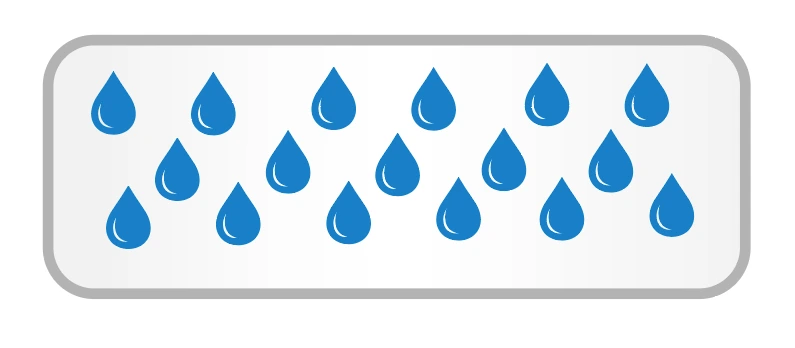
Moisture affects powder flow, compressibility, tablet strength, chemical stability and microbial risk. It can also influence disintegration, dissolution and shelf life.
During formulation development, moisture measurements help determine how hygroscopic APIs and excipients respond to environmental conditions. They can also be used to optimise granulation and drying parameters and to assess the robustness of the formulation across an acceptable moisture range.
Correlating moisture with hardness, porosity and thickness provides insight into how water affects compression behaviour. An insufficient moisture level may reduce binding between particles, while excessive moisture can alter flow, promote sticking or compromise product stability.
Monitoring moisture after compression therefore supports both formulation optimisation and process control.
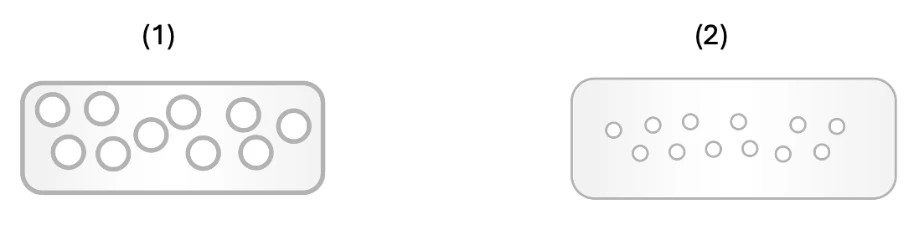
Porosity describes the internal void volume within a tablet and is strongly influenced by formulation composition and compression conditions.
During R&D, porosity provides valuable information about particle rearrangement, deformation and densification. It helps scientists understand how different excipients, binder levels and compression forces affect the internal structure of the tablet.
Porosity is also connected to several performance attributes:
- Higher porosity generally facilitates liquid penetration and disintegration but may reduce mechanical strength. (1)
- Lower porosity can improve tablet strength but may delay disintegration or dissolution. (2)
- Changes in porosity can influence coating uptake and the release profile.
Measuring porosity therefore helps bridge the gap between compression behaviour and expected biopharmaceutical performance.
Hardness reflects the mechanical strength of a tablet and its ability to withstand handling, coating, packaging and transport.
During formulation development, hardness measurements help evaluate compactability and the effects of binders, lubricants and compression force. They can also reveal lubricant sensitivity or insufficient particle bonding.
Tablets that are too soft may chip, break or generate dust, while tablets that are too hard may disintegrate or dissolve too slowly. The objective is therefore not simply to maximise hardness but to achieve the appropriate balance between mechanical strength and drug-release performance.
Traditional hardness testing is destructive and is performed on selected samples. Non-destructive prediction allows the tablet to be preserved for further analysis. This makes it possible to correlate hardness with mass, thickness, porosity, moisture and API content on the same tablet.
Diameter and length measurements provide insight into tooling, tablet geometry and formulation behaviour after compression.
During R&D, these measurements help scientists assess dimensional stability and elastic recovery. They are also useful when selecting tooling and designing tablets for swallowing, coating, scoring and packaging.
Unexpected dimensional variations can indicate deformation, sticking, tooling wear or changes in compression conditions. Monitoring these attributes also helps ensure that scale-up does not negatively affect tablet geometry.
Supporting formulation screening and design of experiments
When multiple CQAs are measured instantly, formulation scientists can compare a larger number of prototypes and compression conditions within a shorter development cycle.
The resulting data can be integrated into DoE and multivariate models to:
- Compare excipient types and concentrations
- Optimise binder, disintegrant and lubricant levels
- Evaluate different granulation and drying conditions
- Study the effects of compression force, dwell time and press speed
- Identify interactions between formulation and process variables
- Define acceptable operating ranges and a robust design space
- Select formulations with the best balance of manufacturability, strength and drug-release performance
This transforms CQA measurement into a formulation-development tool rather than only a quality-control activity.
Building relationships between process parameters and product quality
A single CQA can indicate that a change has occurred, but combined measurements help explain its origin and potential impact.
For example:
- A change in hardness combined with lower porosity may indicate excessive compression.
- Variable mass with a stable API fraction may point towards inconsistent die filling.
- Stable mass combined with a variable API fraction may indicate segregation or poor blend uniformity.
- Changes in moisture accompanied by differences in hardness and thickness may reveal altered compression behaviour.
- Dimensional changes after ejection may indicate excessive elastic recovery.
By correlating these measurements with process parameters, development teams can identify the variables that have the greatest influence on product quality and establish an effective process-control strategy.
From R&D to commercial manufacturing
Using comparable CQA measurements across development, scale-up and manufacturing improves knowledge transfer throughout the product lifecycle.
During R&D, the data support formulation selection and process understanding. During scale-up, they help confirm whether the relationships established at laboratory scale remain valid on larger and faster equipment. During commercial manufacturing, the same attributes can be monitored to verify that the process remains within its validated operating range.
Instant, automated and non-destructive measurement can therefore help:
- Accelerate formulation screening and process development
- Reduce the consumption of development batches and analytical samples
- Improve DoE and multivariate process models
- Identify critical material attributes and process parameters
- Support formulation and process robustness studies
- Facilitate scale-up and technology transfer
- Detect process trends and deviations at an early stage
- Strengthen continuous process verification
- Support real-time release testing strategies
Measuring CQAs after compression creates a direct link between formulation composition, process conditions and final tablet performance. It provides R&D teams with the insights needed to develop robust formulations while giving manufacturing teams the information required to maintain a stable and controlled process.
Conclusion: building the right PAT strategy
Measuring CQAs generates real value only when the resulting data are integrated into a well-designed process analytical technology (PAT) strategy. This requires selecting the most relevant attributes, understanding how they interact and implementing a fit-for-purpose control system capable of delivering reliable information at the appropriate speed.
The right PAT strategy should support the entire product lifecycle, from formulation screening and process development to scale-up, technology transfer and commercial manufacturing. It should also combine complementary technologies to provide a comprehensive understanding of each tablet rather than relying on isolated measurements.
Multiparametric CQA analysers, such as those offered by Pharma Technology, can combine technologies including NIR-SRS, 3D microwave resonance and laser profiling to assess multiple attributes instantly and non-destructively. By connecting formulation and process parameters with mass, dimensions, API fraction, content uniformity, moisture, porosity and mechanical properties, these systems transform analytical data into actionable process insights.